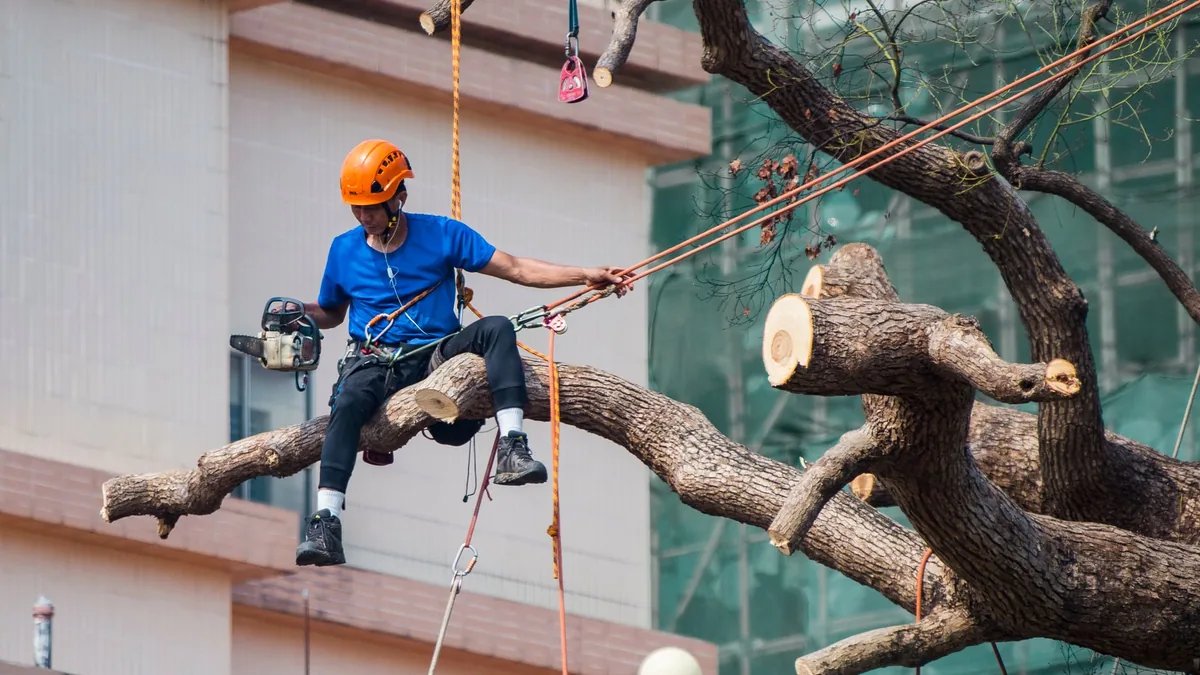
Tree Trimming and Pruning in Carteret, NJ
Good pruning keeps a tree healthier, safer, and better-looking for years; bad pruning shortens its life. Our licensed crew handles routine trimming, crown thinning, deadwooding, and clearance cuts across Carteret and nearby Woodbridge, Rahway, and Linden, cutting to the tree's structure rather than just to the parts you can reach from the ground.
- Cuts made to New Jersey Tree Care Operator standards
- Pre-nor'easter thinning to cut storm risk
- Debris chipped and cleared every visit
Request Your Free Estimate
Tell us what you need — we’ll get back to you fast.
We'll be in touch shortly.
Please call us at (732) 385-9701.
Pruning That Follows the Tree, Not the Ladder
The difference between trimming and damage is where and how the cut is made. We thin crowded crowns to let light and wind pass through, remove deadwood before it falls on its own, raise low canopies for clearance over a driveway or roof, and shape young trees so they grow with strong structure. What we do not do is top a tree — the practice that triggers weak, hazardous regrowth — because New Jersey's Tree Care Operator standard treats sound pruning as a licensed skill, not a hedge-trimmer job.
Thinning is also storm insurance. Heavy ice and snow bring down over-dense limbs first, and evergreens fail under load before deciduous trees do, so a crown that lets weather pass through is far less likely to split in a January storm. A fall pruning visit is one of the cheapest ways to lower your risk before nor'easter season sets in from September through April.
Trimming & Pruning We Handle
Crown thinning & shaping
Selective cuts that open a dense canopy to light and wind without stripping the tree.
Deadwooding
Removing dead and dying limbs before they drop on a car, roof, or walkway.
Clearance pruning
Raising and setting back limbs off roofs, driveways, and sightlines.
Utility-aware cuts
Anything near an energized line is coordinated with the utility under the 10-foot rule.
Why Local Trees Need Local Pruning
Carteret's mix of mature street trees and tight lots shapes how we prune. New Jersey's maple- and oak-heavy canopy, including red and sugar maple, red oak, honeylocust, and London planetree responds well to careful thinning but punishes over-cutting, and a tree hanging over a shared line with a neighbor in Port Reading or Perth Amboy needs cuts planned around both properties.
Where a public tree in the Carteret Shade Tree Committee's right-of-way is involved, we coordinate rather than cut first and ask later. If a tree turns out to be too far gone to save by pruning, we will tell you plainly and point you to tree removal instead of billing you for trimming that only delays the inevitable.
Our Process
How Our Trimming Process Works
Free On-Site Estimate
We walk the property, look at every tree in question, and give you a firm written price — not a phone-only ballpark.
Permits & Utility Check
Where a public tree or a power line is involved, we coordinate with Carteret's Shade Tree Committee and the utility before any saw starts.
The Work & Full Cleanup
The crew does the job in a controlled way and leaves the site raked, chipped, and clear — hauling debris away unless you want the wood or chips kept.
Common Questions
Frequently Asked Questions
When is the best time of year to trim a tree in New Jersey?
For most species, late dormancy through early spring is ideal, but safety pruning can happen any time. Because New Jersey's nor'easter season runs September through April, a fall thinning visit is a smart way to cut storm risk before the heavy weather arrives.
Can I prune a tree near power lines myself?
No. New Jersey rules prohibit anyone without utility training from working within 10 feet of an energized line, and the utility may handle line-clearance on its own cycle. Contact with a live line can be fatal, so any limb near a service drop is a coordinated, licensed job we arrange with the utility for you.
Is topping a tree ever a good idea?
No. Topping removes the crown indiscriminately and triggers weak, densely-clustered regrowth that is far more likely to fail in a storm later on. Proper thinning and reduction cuts achieve real size control while keeping the tree's structure sound, which is why we never top a tree even when a customer asks for it.
How often should mature trees be pruned?
Most mature shade trees benefit from a structural pruning every three to five years, with deadwood removed sooner if you spot it. We can set a simple cycle at your estimate so trimming stays ahead of problems rather than chasing them.